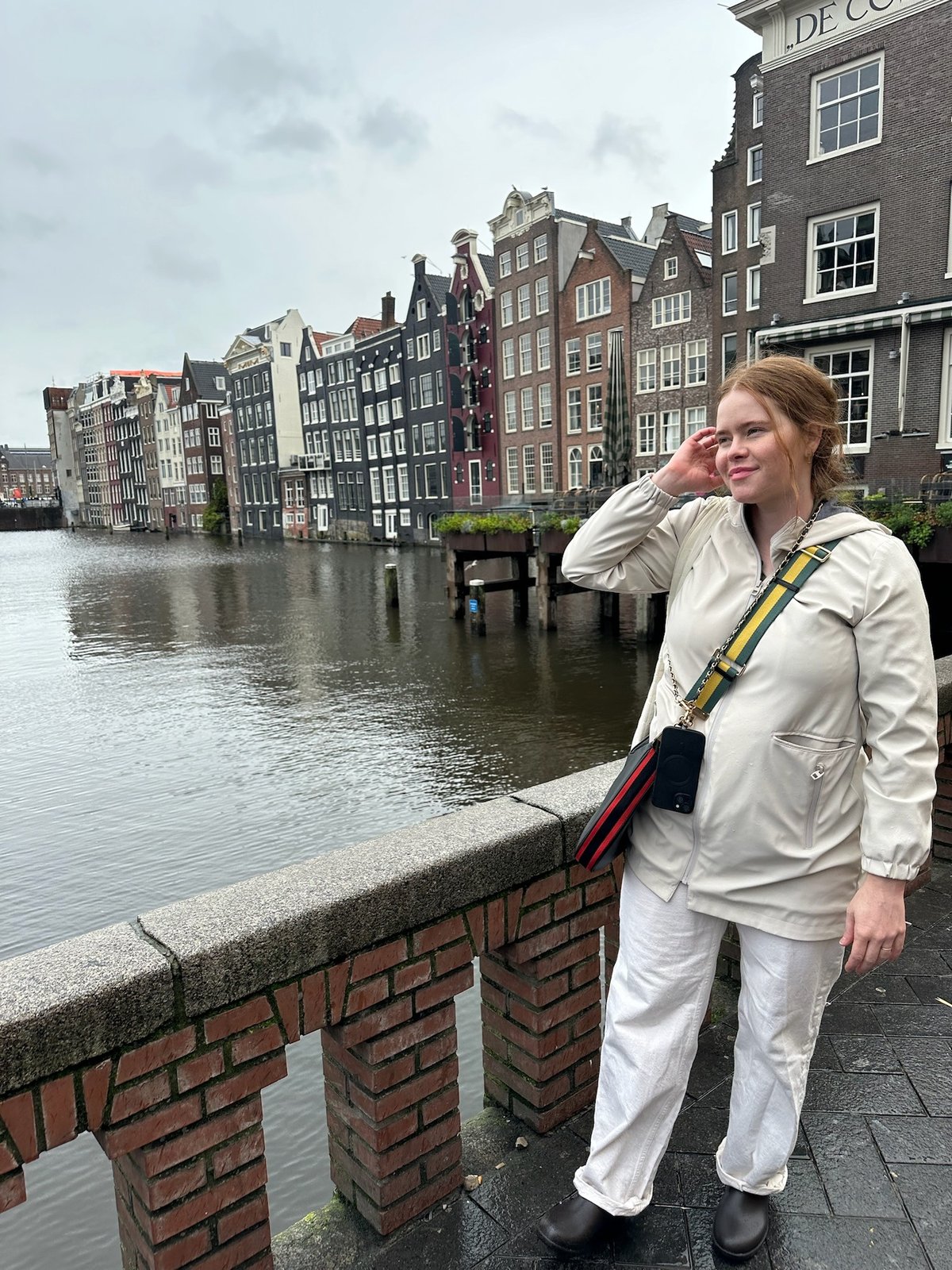
My mom has opportunities she can’t see. My grandmother did too. For a long time, so did I.
In a few weeks I’m walking the Portuguese coast alone — nine days on foot, Porto to Santiago, no travel partner, no group, no one to talk me through it. People keep calling it brave.
It isn’t, exactly. I’m doing it to find out whether I can stand my own company. And I’m doing it because I come from a line of women who had the means to live bigger lives and didn’t — who stayed small on purpose, out of fear — and I would like to be the one who stops.
The women before me
My grandmother wanted a bigger life. She grew up in a small town and a small time, one that handed her a role and expected her to fill it without complaint: full-time work and all the housework and three kids. She did it. She also made every milestone for everyone around her feel important — birthdays, graduations, the small ceremonies of a family — and I’m not sure anyone ever did that for her.
She had a lot of anxiety. Real anxiety — the kind where you can’t walk through an IKEA without a panic attack. She also had the money to see the world and couldn’t let herself go without her husband, who didn’t travel — so, mostly, she didn’t. (I’ve told the rest of that story — how she finally decided to go with her sister, and the stroke that came first — in the post this one grew out of, You Don’t Need a Different Life.)
What stays with me isn’t the trip she missed. It’s the last ten years of her life, run entirely by fear — terrified of falling, terrified of being alone, terrified of nearly everything. (My grandfather is one of the people I’m closest to in this world. This isn’t a story about a bad man. It’s a story about fear, and how much of a life it can quietly eat.)
My mom is the next chapter of the same book. She is a serial planner and a serial non-executor. She has designed whole businesses — done the real work, the setup, the paperwork — and then walked away from every one of them, right before the doing. She spent years in a marriage that didn’t serve her and almost left it more times than I can count. She didn’t.
She is a genuinely beautiful woman who doesn’t believe it, because she doesn’t look perfect, and she lets that keep her out of rooms and off of activities and away from showing up all the way. She builds a set of rules in her head about what has to be true before she’s allowed to have what she wants. She has to be thin enough. Sure enough. Ready enough. The bar keeps moving, and the life keeps waiting on the other side of it.
The fear made her decisions for her. It kept her in the marriage. It kept her in a small town she hated — the town my dad grew up in, not even her own — because leaving was scarier than staying miserable. Fear of not having enough pushed her into a PhD program she didn’t want and kept her in it long past wanting. It kept her at a job she didn’t enjoy that ate more of her life than she’d ever have chosen to give. After her divorce she didn’t date, though she was lonely, because that was frightening too. On and on — a full life, right there, unlived.
The pattern I recognized in myself
Here’s the part I’d rather not write: I’m not the exception in this family. I’m just the one who noticed.
For a long time I didn’t dare put myself out there. I was so afraid of failing — of not being perfect — that I couldn’t take action at all. I have proof of this, in the least sentimental form imaginable. Years ago I did a multi-day leadership training that included a work-style assessment — the kind where they don’t just ask you, they interview the people you work with. Mine came back “analytical,” and the analytical style’s signature weakness — the thing my own coworkers were quietly describing — was not taking action. My single biggest takeaway from the entire program was two words: be bold. I’ve been trying to live those two words ever since. I don’t always remember them. But I have them.
I can see the fear in the biggest decisions of my life. I’ve been married twice, and if I’m honest, I entered both marriages out of fear — specifically fear of the timeline, of the biological clock, of running out of road. From where I sit now — older, with a daughter — I can see how unfounded that fear was. I had so much more time than I thought. And the truly frightening thing was never running out of time. It was locking myself into something that didn’t serve me instead of keeping my options open and choosing myself.
Even travel — the thing I now build a whole life around — fear had that too. By the time I had the money and the vacation days, I wasn’t always in a relationship, which meant I didn’t have a partner conscripted as my automatic travel buddy. My friends were very partnered; going somewhere without their significant other would never have occurred to them. I couldn’t get anyone to commit. So I didn’t go. For years, the lack of a plus-one was reason enough to stay home.
What changed
What broke the pattern wasn’t a pep talk. It was, of all things, having my daughter.
I expected motherhood to make me more afraid of the world. It made me braver. Part of that was timing: my grandmother died right around when my daughter was born, and standing that close to how fast a life ends rearranges what you’re willing to waste on fear.
And part of it was physical, which I didn’t see coming. By the end of my pregnancy I could barely get up a hill. A few weeks after giving birth, that same hill was nothing. Losing my body’s ability for a little while turned out to be a strange gift — I learned to value my health and my strength at a moment when I could still protect them and build on them, instead of only mourning them later, the way my grandmother had to.
What “living below your privilege” actually means
Privilege isn’t the same for everyone — I know that. But a lot of us live below ours anyway, and the thing holding us under the line usually isn’t money or ability. It’s fear.
For me, living at my privilege looks like permission. Permission to be seen. Permission to exist. Permission to take up space. Before I had my daughter, I didn’t feel entitled to any of it — and somewhere in becoming a mother, maybe because I’d finally satisfied one of the world’s official expectations of me, I started to feel like I was allowed.
It’s also re-parenting. When I parent my daughter, it’s obvious that she deserves to take up space — no conditions, no rules to clear first. And that clarity runs backward: I can suddenly see that the things that made me feel not-good-enough as a kid had everything to do with the adults around me and nothing to do with me. So living without fear now means giving myself the thing I give her by default — permission to be embarrassing, to fail, to not be perfect, and to keep moving anyway.
(I’m bringing an absurd fold-down sun visor on this walk. It looks ridiculous. I’m wearing it anyway. Permission to be embarrassing, made literal.)
Your next step
Before your next “I can’t yet,” run the decision through four questions:
- Is a real obstacle stopping me — or a rule I invented about when I’m allowed?
- If a friend described this exact fear to me, would I find it convincing?
- What’s the actual cost of waiting — and is it smaller or larger than the risk?
- What would I do in the next 24 hours if I trusted myself?
What I want for you, if you grew up the way I did
The women I grew up around lived in a place that was behind the times about what a woman was worth. I still feel it when I visit — how deferential the women are to the men, how automatic it is.
So here’s what I want for you. I want you to believe you deserve to take up space. That you are valuable — not less valuable than the men
Decide what’s worth it — on purpose
The free Self-Investment Filter is a 10-minute decision tool for choosing the bigger life without the guilt — plus a 30-day spend-and-feel log to surface what you actually value. I’ll send it to your inbox:
Leave a Reply